Постови

The benefits of Cambridge English: Young Learners for young learners

Слика
Amy Devine and Maggie Dunlop, Research and Thought Leadership, Cambridge English Language Assessment  Cambridge English: Young Learners is a suite of tests developed specifically for children around 6 – 12 years of age. There are three levels, called Starters, Movers and Flyers , and each level comprises three papers testing different language skills: listening, reading and writing, and speaking.  Cambridge English: Young Learners is designed to make learning English fun and enjoyable, and give children and their families a chance to celebrate their achievements in English. For this reason, the tests use age-appropriate activities and colourful images, and all candidates receive a certificate showing their achievement in the form of one to five shields per paper. This article uses evidence mostly from Cambridge English research in schools in Spain, Taiwan, and Vietnam to show how Cambridge English: Young Learners motivates children, encourages them and their teacher...

CAE WRITING TIPS

Слика
Since I am a teacher with a lot of experience in preparing students for CAE exam , I have encountered numerous questions about writing part. It generally differs from the Serbian essays, so it is a bit difficult for our students to adjust to the English style. _______________________________________________________________ HOW TO START Planning is the most essential part of a successful piece of writing. Think about how many paragraphs you want then get some ideas about the content of each. You should always have a topic sentence followed by specific reasons and examples to support your opinion. Do not forget to include: ·          Linking words, inversion ·          Passive forms and conditional sentences ·          CAE level vocabulary. _______________________________________________________________ TIME MANAGEMENT You ...

JEDAN ČAS ENGLESKOG JEZIKA SA PLAYSCHOOL GRUPOM

Слика
   Moje ime je Marina. Profesor sam engleskog jezika i u našoj školi stranih jezika radim između ostalog i sa decom predškolskog uzrasta. Cookie and friends je program koji nam pomaže da časovi engleskog na playschool nivou budu dinamični, zanimljivi i raznoliki.    Prošle nedelje smo na času engleskog obnavljali reči za delove tela. Počeli smo čas plešući i pevajući Hello song i pozdravili glavnog lika programa, Cookie mačka. Potom smo poređali kartice za delove tela na tablu, ponavljajući reči i igrali igru Memory game u kojoj je trebalo da deca pogode koja kartica nedostaje. Uživali smo dok smo slušali Body song i oponašali mačka dok smo pevali glavnu pesmu unit-a. Usledilo je slušanje priče unit-a What’s the matter, Cookie? nakon čega smo vežbali da glumimo, dramatizujući priču.    Na kraju č asa smo predahnuli uz video materijal i omiljene pesmice i uz pesmu The Pinocchio ponovo slu š ali i obnovili re č i za del...

TEACHING TEENAGERS – a challenge worth taking

Слика
After having been working as an English teacher for 16 years, I can still remember the first time I stood in front of a group of teenage students. Being a novice teacher it took me some time to understand that teenagers have their own learning styles which differ from those of children and adults. Little learners are so full of energy and they are ready to complete assignments just for your praise and smilies in their notebooks. On the other hand, there are adults who are focused on meeting their language goals. Teens are somewhere in the middle of a scale. I realized long time ago that teachers have to put in a bit more effort in order to increase teenage student motivation. Teenagers can be moody and loud from time to time, but also curious, creative and independent. With this in mind, here are some excellent steps (already tried at our school) that can help capture the attention of our teen students: Build rapport – get to know your students and their interes...

Listes des séries françaises (pour apprendre le Français) avec les liens

Слика
Remarque. Certains liens pourraient ne plus fonctionner à cause du copyright. Si c’est le cas, faites une nouvelle recherche sur YouTube et vous trouverez peut-être à nouveau votre série ;-)  Séries Françaises créées pour les étudiants de FLE : Extra French Séries Françaises “Classiques” : Fais pas ci fais pas ça La Famille Guerin Napoléon Séries Françaises Courtes et humouristiques : Bref Un gars une fille Caméra Café Séries Françaises en dessins animés : Il était une fois l’Homme Les mystérieuruse citées d’or Les aventures de Tintin prepared by: Jelena K. Bralović  , French teacher, member of  our team

The Importance of Teaching Literature

Слика
Most people assume literature is an important part of education. But not everyone really thinks about why that is. The importance of literature on teaching lies in its ability to foster critical reading, build valuable skills, and expand students' worldviews. ·          Literature in the Classroom In today’s fact-obsessed culture, the importance of literature on teaching and the classroom is sometimes  questioned. Why bother having kids read stories, spend their time with books about things and events that aren’t even real? Why not just teach them what they need to know and send them on their way? Of course, to most educators these questions seem ludicrous. Of course literature is important—why would it have such a central place in the curriculum if it wasn’t? But you may not realize in just how many ways literature really does contribute to a child’s education. Because education is and should be about more than passing on dry inform...

April fool – the language of jokes and tricks

Слика
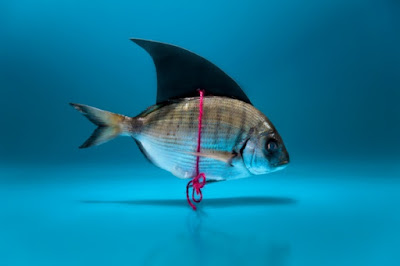
April 1 st  is known in many Western countries as ‘ April Fool’s Day ’. The idea is to  trick  other people, to try to make them believe things that are not true. If you succeed, you shout ‘April fool!’ at the person you have tricked. In honour of April Fool’s Day, this post will look at some words and phrases connected with this custom. One important thing is to remember that we   play tricks on   someone (we don’t ‘make’ or ‘do’ them). The tricks are often   practical jokes   (using actions instead of words), and they are almost always   harmless   – they are intended to be fun. Other words for this kind of trick are   prank   or   hoax , although the word ‘hoax’ can also be used for more serious, unpleasant tricks in the same way as the words   fraud   or   deceit . Children often like to  kid  or  dupe  (trick) their friends on April Fool’s day with simple jokes such as...